 ZoomPhoto 1 of 1
POCO
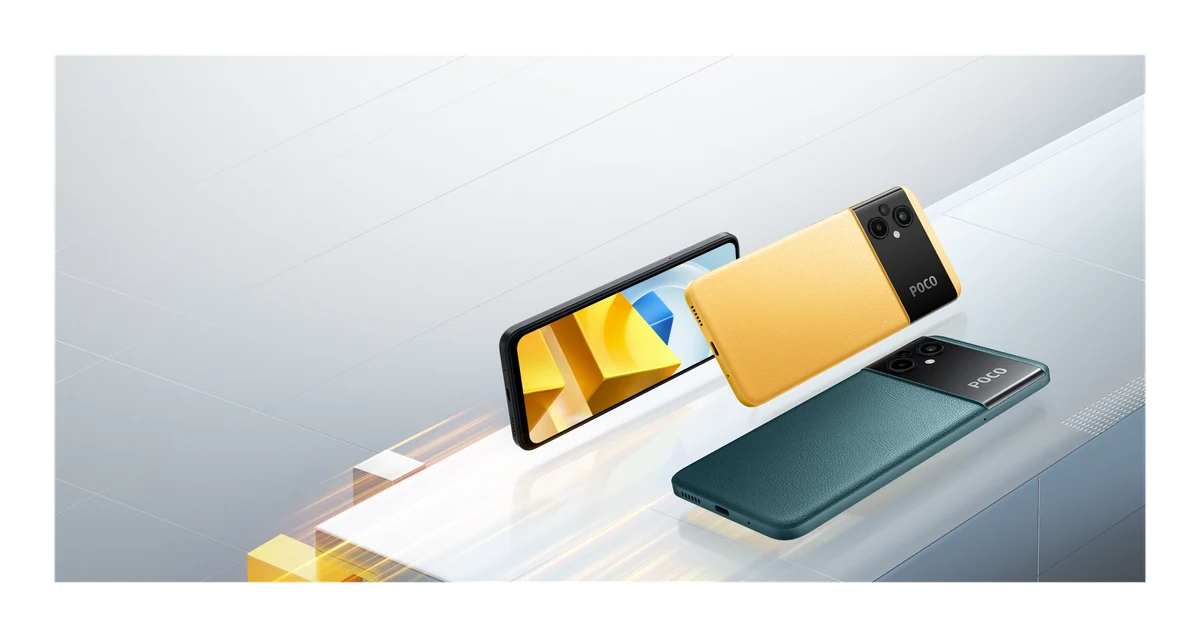
POCO M5
- AnTuTu
- 555,354
- Chipset
- MediaTek Helio G99
- Screen size
- 6.58 ″
- Capacity
- 5,000 mAh
Newer model: POCO M6 (2024) · compare →
Previous model: POCO M3 (2020) · compare →
A leather-textured budget 4G phone built around the Helio G99 - the most sensible chip choice in its class. Nothing else about it is remarkable, which at $189 is the point.
Pros
- Efficient Helio G99
- Distinctive leather-look back
- 5000mAh battery
- 90Hz display
Cons
- 720p-adjacent LCD quality
- 18W charging
- Mono speaker
Below average
#1,184 of 1,392 phones#19 of 44 phones under $200Computed from specs & benchmarks via our public methodology.
POCO M5 benchmarks
Published results for the POCO M5, next to its closest rivals and its predecessor
AnTuTu (typical)
- POCO M5555,354
- Samsung Galaxy A24 (4G) vs 555,354
Typical published AnTuTu totals whose AnTuTu version was not recorded, compared only with each other.
Geekbench 6 (single)
- POCO M5730 Bottom 13%
- Samsung Galaxy A24 (4G)730
- OPPO A78 5G chip result · via MediaTek Dimensity 700 vs 683
- Infinix SMART 20e chip result · via Unisoc T7250 vs 429
- POCO M6 chip result · via MediaTek Helio G91 vs 413
- POCO M3 chip result · via Qualcomm Snapdragon 662 vs 332
Published results: review runs where we found them, otherwise typical published figures. A chip's figure is normally the median of review runs on devices with that chip.
Geekbench 6 (multi)
- POCO M52,010 Bottom 18%
- Samsung Galaxy A24 (4G)2,010
- OPPO A78 5G chip result · via MediaTek Dimensity 7001,825
- Honor X81,450
- POCO M6 chip result · via MediaTek Helio G911,402
- Infinix SMART 20e chip result · via Unisoc T72501,402
- POCO M3 chip result · via Qualcomm Snapdragon 6621,129
Published results: review runs where we found them, otherwise typical published figures. A chip's figure is normally the median of review runs on devices with that chip.
POCO M5 vs POCO M3: what changed
The biggest differences from the POCO M3, the previous generation, in our spec and benchmark data.
| Spec | POCO M3 | POCO M5 |
|---|---|---|
| NFC | No | Yes |
| Stereo speakers | Yes | No |
| Front camera | 8 MP | 5 MP |
| Refresh rate | 60 Hz | 90 Hz |
| RAM (max) | 6 GB | 4 GB |
| Capacity | 6,000 mAh | 5,000 mAh |
POCO M5 specs
Everything we track for the POCO M5
Display
- Screen size
- 6.58 ″
- Panel type
- IPS LCD
- Resolution
- 2408x1080
- Pixel density
- 401 ppi
- Refresh rate
- 90 Hz
Performance
- Chipset
- MediaTek Helio G99
- AnTuTu (typical)
- 555,354
- Geekbench 6 (single)
- 730Bottom 13%
- Geekbench 6 (multi)
- 2,010Bottom 18%#369 of 447
- RAM (max)
- 4 GB
- Storage options
- 64GB / 128GB
- Storage type
- eMMC 5.1
Camera
- Main camera
- 50 MP
- Main aperture
- f/1.8
- Max video
- 1080p@30fps
- Front camera
- 5 MP
- OIS
- No
Battery
- Capacity
- 5,000 mAhBattery capacity by year and maker
- Wired charging
- 18 W
Design
- Weight
- 201 g
- Thickness
- 8.9 mm
- Frame material
- Plastic
Connectivity
- 5G
- No
- Wi-Fi
- Wi-Fi 5
- Bluetooth
- 5.3
- NFC
- Yes
- USB
- USB-C 2.0
- eSIM
- No
Software
- OS at launch
- Android 12 (MIUI 13)
- OS update pledge
- 2 years
Audio
- Stereo speakers
- No
- 3.5mm jack
- Yes
Page last updated Nov 22, 2026.
POCO M5 FAQ
Is the POCO M5 good in 2026?
The POCO M5 earns an Inno Score of 33.6/100 (“Below average”), #1,184 of 1,392 phones. Its successor, the POCO M6, came out in 2024 and scores 33.8. A leather-textured budget 4G phone built around the Helio G99 - the most sensible chip choice in its class. Nothing else about it is remarkable, which at $189 is the point.
What is the POCO M5 AnTuTu score?
The POCO M5 scores 555,354 points in AnTuTu. In Geekbench 6 it reaches 730 single-core and 2,010 multi-core.
What are the key specs of the POCO M5?
Chipset: MediaTek Helio G99 · Screen size: 6.58 ″ · Capacity: 5,000 mAh · Main camera: 50 MP
What are the closest alternatives to the POCO M5?
Its closest rivals on InnoReviews are POCO M3, POCO M6, Infinix SMART 20e — open the comparison pages for a spec-by-spec breakdown.
Use this on your site or forum
Copy a ready-made link. Scores on this page update as new results are published, so the link always leads to the current figures.