The Best Monitors Under $300: Tested and Ranked
You don't need $500 for a stellar high-refresh screen. Here is what $300 actually buys you right now across gaming, esports, and daily productivity.
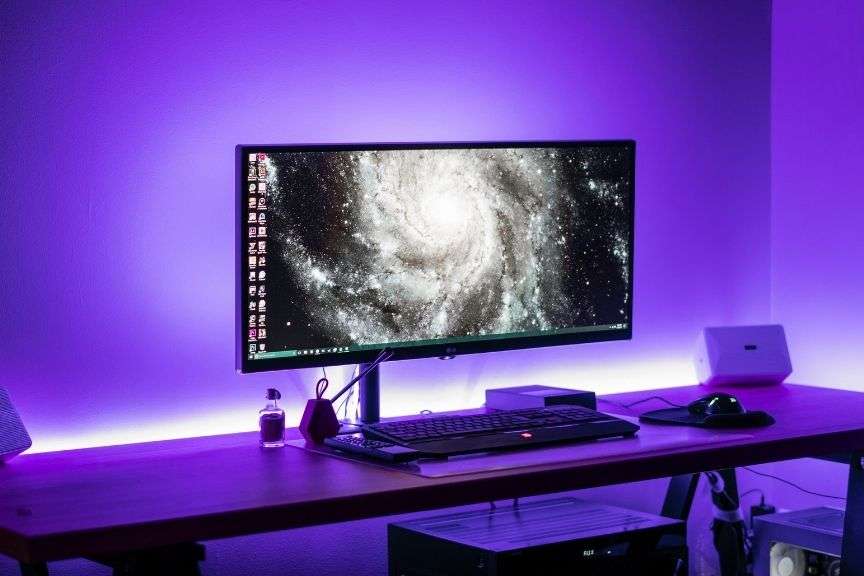
You do not need to drop $500 on an OLED to get an exceptional PC display. A budget of $300 easily lands you a sharp 27-inch 1440p Fast-IPS panel with a 165Hz or higher refresh rate, rock-solid color accuracy, and sub-4ms gray-to-gray response times.
The market has shifted drastically in favor of buyers. Features that once commanded massive premiums—like hardware KVM switches, factory color calibration, and variable overdrive—are now standard fare under $300. We combed through the spec sheets and real-world panel testing to separate legitimate bargains from cheap displays stuffed with marketing gimmicks.
Quick Picks
- Best Overall: Gigabyte M27Q (Rev 2.0) – 1440p, 170Hz, built-in KVM switch.
- Best for Pure Motion Clarity: LG UltraGear 27GR75Q-B – 1440p, 165Hz, superb response tuning.
- Best Value Pick: Acer Nitro XV272U V3 – 1440p, 180Hz, frequently discounted under $200.
- Best for Competitive Esports: ASUS TUF Gaming VG259QM – 1080p, 280Hz Fast IPS speed demon.
- Best Budget Ultrawide: LG 34WP65G-B – 34-inch 21:9 IPS for spreadsheets and timeline editing.
What $300 Buys You (And What to Ignore)
Before pulling the trigger on any monitor in this bracket, keep your expectations realistic. Here is how we evaluate sub-$300 hardware:
- Resolution and Panel Type: 2560x1440 (QHD) on a 27-inch IPS panel is the gold standard here. Avoid 27-inch 1080p screens because the 81 PPI pixel density looks grainy. Stick to IPS for consistent colors and viewing angles. Budget VA panels might offer deep contrast, but most suffer from brutal black smearing in dark scenes.
- Refresh Rates: Expect 165Hz to 180Hz at 1440p, or 240Hz to 280Hz if you stick to 1080p for twitch shooters. Anything lower on a gaming screen under $300 is an immediate pass.
- Ignore the HDR Badges: If you see "HDR400" or "HDR10" on a $250 monitor, pretend it is not there. Without local dimming zones and at least 600 to 1,000 nits of true peak brightness, enabling HDR just washes out your color palette.
- Ergonomics Matter: A tilt-only stand is a corner-cutting measure. We look for height, swivel, and pivot adjustments, or at least a standard 100x100mm VESA mount pattern so you can bolt it to an aftermarket arm.
The Best Monitors Under $300: Our Reviews
Gigabyte M27Q (Rev 2.0) – Best Overall
The Gigabyte M27Q remains our go-to recommendation for anyone with a $250 to $270 budget. The original version made waves with its built-in KVM switch and crisp 170Hz panel, but it had a BGR subpixel layout that caused slight text fringing in Windows. Gigabyte fixed that with the Revision 2.0 model, swapping in a standard RGB subpixel Fast-IPS panel.
Pixel transitions are snappy, input lag sits below 4ms, and color coverage hits 95% DCI-P3 out of the box. The integrated KVM button on the rear lets you share a single keyboard and mouse between your gaming rig and a work laptop plugged in via USB-C. For under $270, no other screen matches this balance of utility and gaming performance.
LG UltraGear 27GR75Q-B – Best Motion Clarity
LG has owned the mid-range gaming segment for years, and the UltraGear 27GR75Q-B (and its sibling, the 27GP850-B when on sale) proves why. Retailing between $240 and $280, this 27-inch 1440p display delivers some of the cleanest motion handling in the sub-$300 bracket.
LG's panel overdrive tuning is top-tier. On its "Fast" setting, there is virtually zero overshoot ghosting or trailing behind fast-moving objects. The stand offers full height, tilt, and pivot adjustments, though the low static contrast ratio (around 900:1) means blacks look slightly gray in a pitch-black room. In moderate room lighting, it is tough to beat.
Acer Nitro XV272U V3 – Best Value Under $200
If you want 1440p gaming but your budget sits closer to $200 than $300, buy the Acer Nitro XV272U V3. It pushes an overclocked 180Hz refresh rate on an Agile-Splendor IPS panel with surprisingly accurate factory calibration.
You sacrifice premium build materials—the plastic chassis feels light and basic—and the built-in 2W speakers sound like tin cans. But where it counts, the screen punches well above its price tag. Motion is crisp, FreeSync/G-Sync compatibility works without flickering, and Acer includes a surprisingly flexible stand with height and pivot options.
ASUS TUF Gaming VG259QM – Best for Esports
For dedicated competitive players grinding Valorant, CS2, or Apex Legends, raw resolution takes a back seat to frame rate and motion clarity. The ASUS TUF VG259QM is a 24.5-inch 1080p panel capable of overclocking to 280Hz, typically priced around $220 to $240.
Its claim to fame is ELMB Sync (Extreme Low Motion Blur), which allows ASUS's backlight strobing feature to run simultaneously with variable refresh rate (G-Sync/FreeSync). The result is razor-sharp target tracking during fast pans. The trade-off is 1080p resolution, which feels cramped for daily productivity, but for pure competitive speed under $300, it is our top pick.
LG 34WP65G-B – Best for Productivity & Ultrawide Workflows
If you spend more time inside spreadsheets, video timelines, and multiple browser windows than playing fast-paced games, the LG 34WP65G-B offers massive screen real estate for roughly $280. It gives you an expansive 34-inch 21:9 aspect ratio with solid IPS color reproduction.
Keep in mind that it runs at 2560x1080 resolution rather than 3440x1440. Pixel density is on par with a 27-inch 1080p monitor, meaning fine text is not as crisp as a QHD screen. But for side-by-side document editing, audio timelines, and casual sim gaming at 75Hz, the horizontal space is a huge practical upgrade over a standard 16:9 monitor.
Sub-$300 Monitor Comparison
| Model | Size & Res | Panel Type | Refresh Rate | Stand Adjustments | Best For |
|---|---|---|---|---|---|
| Gigabyte M27Q (Rev 2.0) | 27" 1440p | Fast IPS (RGB) | 170Hz | Height, Tilt | Best Overall |
| LG UltraGear 27GR75Q-B | 27" 1440p | IPS | 165Hz | Height, Tilt, Pivot | Motion Clarity |
| Acer Nitro XV272U V3 | 27" 1440p | Fast IPS | 180Hz | Height, Tilt, Swivel, Pivot | Maximum Value |
| ASUS TUF VG259QM | 24.5" 1080p | Fast IPS | 280Hz | Height, Tilt, Swivel, Pivot | Esports & FPS |
| LG 34WP65G-B | 34" 2560x1080 | IPS | 75Hz | Height, Tilt | Multitasking |
Three Red Flags to Avoid When Shopping Under $300
Manufacturers love padding spec sheets with buzzwords that mask cheap panel hardware. Watch out for these three traps:
- Deeply curved budget VA panels: 1500R or 1000R curves on sub-$200 VA monitors (like older Samsung Odyssey G5 models) look aggressive, but the slow dark-pixel transition times cause distracting "black smearing" in games. Unless you only play flight sims or strategy games, stick to Fast IPS.
- "1ms MPRT" claims: MPRT (Moving Picture Response Time) measures backlight strobe blur, not actual pixel response time. It often dims screen brightness to unviewable levels and introduces severe screen flicker. Look for true GtG (Gray-to-Gray) performance tested by independent reviewers.
- Non-adjustable stands without VESA mounts: Some bargain-basement screens save costs by omitting VESA screw holes entirely while providing a fixed stand. Unless your desk is built at the exact ergonomic height you need, skip them.
FAQ
Is 1440p noticeably better than 1080p on a 27-inch monitor?
Yes, significantly. A 27-inch 1080p screen has a pixel density of roughly 81 pixels per inch (PPI), which makes text look soft and jagged. Stepping up to 1440p (2560x1440) bumps that density to 109 PPI, providing sharper text rendering, crisper in-game details, and nearly 77% more desktop working space.
Can I run a 1440p 165Hz monitor on a budget graphics card?
You can run desktop tasks, video streaming, and lighter esports titles (like Rocket League or Counter-Strike 2) at 1440p high frame rates with entry-level GPUs like the RTX 4060, RX 7600, or older RTX 3060. For heavier AAA games, you will likely need to rely on upscaling tools like DLSS or FSR to hit 100+ FPS at 1440p.
Do I need HDMI 2.1 on a monitor under $300?
Not for PC use. DisplayPort 1.4 handles 1440p at up to 240Hz without issue. HDMI 2.1 is primarily necessary if you want to connect a PlayStation 5 or Xbox Series X to run 4K 120Hz signals, but for PC gaming at 1080p or 1440p under $300, DisplayPort 1.4 and standard HDMI 2.0 are more than adequate.