 ZoomPhoto 1 of 1
Apple
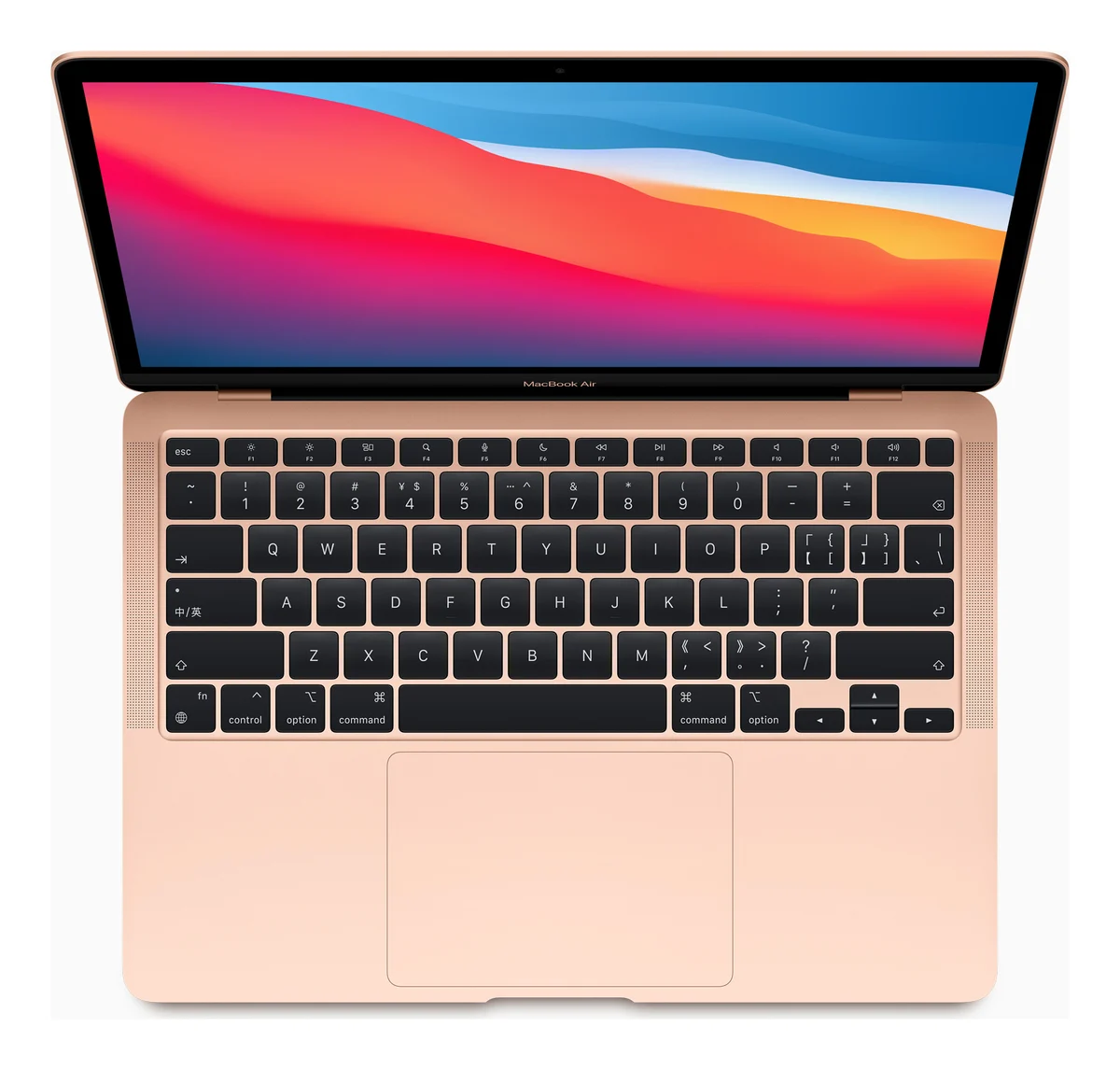
Apple MacBook Air 13 (M1)
- Processor
- Apple M1 (8-core)
- RAM
- 8 GB
- Screen size
- 13.3 ″
- Weight
- 1.29 kg
Newer model: Apple MacBook Air 13 (M2) (2022) · compare →
The 2020 MacBook Air replaced its Intel chip with Apple's 8-core M1 and lost the fan. The $999 base model has the 7-core GPU, 8GB of memory and 256GB of storage, while an 8-core GPU version with 512GB was sold at a higher price. The chassis and 13.3-inch 2560x1600 display carry over from the Intel model.
Pros
- Fanless design that stays silent under load
- Over 14 hours of web browsing in review testing
- 1.29kg aluminum chassis, 16.1mm at its thickest
- Touch ID and a backlit Magic Keyboard
- 2560x1600 display with P3 wide color and True Tone
Cons
- Only two Thunderbolt / USB 4 ports, both on the left side
- Low-resolution 720p webcam
- Thick display bezels
- Supports only one external display
Below average
#539 of 602 laptops#51 of 75 laptops under $1000Computed from specs & benchmarks via our public methodology.
Performance uses the published results of the Apple M1 (8-core), because we have no benchmark result for this device itself yet.
Apple MacBook Air 13 (M1) benchmarks
We have no benchmark result for the Apple MacBook Air 13 (M1) itself yet, so its bars show the published results of its chip, the Apple M1 (8-core), tagged as the chip's
Geekbench 6 (single)
- Apple MacBook Air 13 (M2) chip result · via Apple M2 (8-core) vs 2,599
- Apple MacBook Pro 16 (M1 Pro) chip result · via Apple M1 Pro (10-core) vs 2,409
- Apple MacBook Air 13 (M1) chip result · via Apple M1 (8-core)2,363
- Dell Latitude 5450 vs 2,338
- ASUS Zenbook 14 (UX3480QA) vs 2,079
Published results: review runs where we found them, otherwise typical published figures. A chip's figure is normally the median of review runs on devices with that chip.
Geekbench 6 (multi)
- Apple MacBook Pro 16 (M1 Pro) chip result · via Apple M1 Pro (10-core)12,440
- ASUS Zenbook 14 (UX3480QA)10,391
- Apple MacBook Air 13 (M2) chip result · via Apple M2 (8-core)10,089
- Dell Latitude 54509,846
- Apple MacBook Air 13 (M1) chip result · via Apple M1 (8-core)8,622
Published results: review runs where we found them, otherwise typical published figures. A chip's figure is normally the median of review runs on devices with that chip.
Apple MacBook Air 13 (M1) specs
Everything we track for the Apple MacBook Air 13 (M1)
Display
- Screen size
- 13.3 ″
- Panel type
- IPS (Retina)
- Resolution
- 2560x1600
- Refresh rate
- 60 Hz
- Peak brightness
- 400 nits
Performance
- Processor
- Apple M1 (8-core)
- Graphics
- Apple M1 7-core GPU
- RAM
- 8 GB
- RAM type
- LPDDR4X (unified)
- Storage
- 256 GB
- Storage type
- SSD
Battery
- Capacity
- 49.9 Wh
- Web browsing endurance
- 14.7 h
- Charging
- 30 W
Design
- Weight
- 1.29 kg
- Thickness
- 16.1 mm
- Material
- Aluminum
Connectivity
- Ports
- 2x Thunderbolt 3 / USB 4, 3.5mm
- Wi-Fi
- Wi-Fi 6
- Bluetooth
- 5.0
- Webcam
- 720p FaceTime HD
- Biometrics
- Touch ID
Software
- Operating system
- macOS Big Sur
Page last updated Nov 6, 2026.
Apple MacBook Air 13 (M1) FAQ
Is the Apple MacBook Air 13 (M1) good in 2026?
The Apple MacBook Air 13 (M1) earns an Inno Score of 45.1/100 (“Below average”), #539 of 602 laptops. Its successor, the Apple MacBook Air 13 (M2), came out in 2022 and scores 48.7. The 2020 MacBook Air replaced its Intel chip with Apple's 8-core M1 and lost the fan. The $999 base model has the 7-core GPU, 8GB of memory and 256GB of storage, while an 8-core GPU version with 512GB was sold at a higher price. The chassis and 13.3-inch 2560x1600 display carry over from the Intel model.
What are the key specs of the Apple MacBook Air 13 (M1)?
Processor: Apple M1 (8-core) · RAM: 8 GB · Screen size: 13.3 ″ · Weight: 1.29 kg
What are the closest alternatives to the Apple MacBook Air 13 (M1)?
Its closest rivals on InnoReviews are Apple MacBook Air 13 (M2), Apple MacBook Pro 13 (M1), Apple MacBook Pro 16 (M1 Pro) — open the comparison pages for a spec-by-spec breakdown.
Use this on your site or forum
Copy a ready-made link. Scores on this page update as new results are published, so the link always leads to the current figures.