 ZoomPhoto 1 of 1
Apple
Apple MacBook Pro 14 (M1 Pro)
- Processor
- Apple M1 Pro (10-core)
- RAM
- 16 GB
- Screen size
- 14.2 ″
- Weight
- 1.6 kg
Newer model: Apple MacBook Pro 14 (M2 Pro) (2023) · compare →
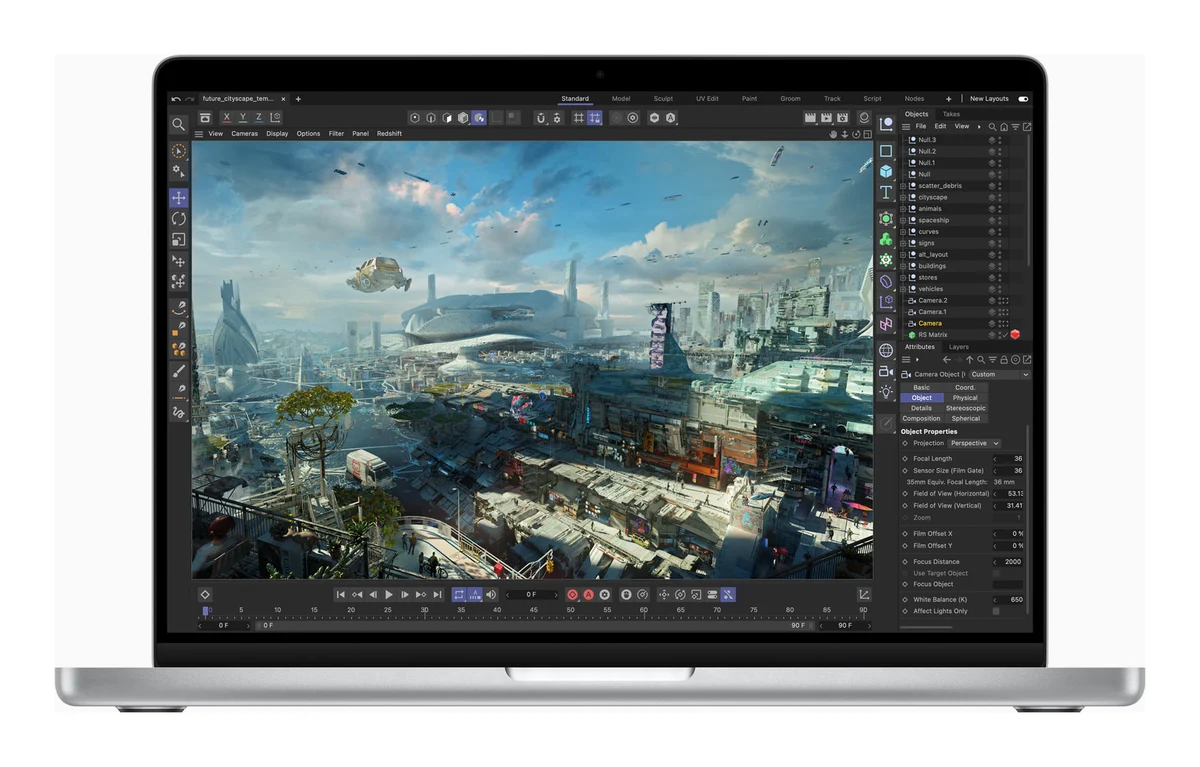
The 2021 redesign brought HDMI, an SD card slot and MagSafe back to the MacBook Pro, and the new 14-inch model added a 120Hz mini-LED display. This record is the 10-core M1 Pro with a 16-core GPU, 16GB of memory and 1TB of storage at $2,499; an 8-core model started at $1,999 and M1 Max was optional.
Compare with
Same generation:
Pros
- 120Hz ProMotion mini-LED display with a 1600-nit HDR peak
- Three Thunderbolt 4 ports plus HDMI, SDXC slot and MagSafe 3
- About 14 hours of web browsing in review testing
- 1080p webcam and six-speaker sound system
- Ships with a 96W adapter that supports fast charging
Cons
- Display notch cuts into the menu bar area
- Heavier than the 13-inch model at 1.6kg
- Web runtime in review testing trails the 13-inch M1 model's in the same test
- 1600-nit peak is for HDR content only; SDR is 500 nits
Performance uses the published results of the Apple M1 Pro (10-core), because we have no benchmark result for this device itself yet.
Apple MacBook Pro 14 (M1 Pro) benchmarks
We have no benchmark result for the Apple MacBook Pro 14 (M1 Pro) itself yet, so its bars show the published results of its chip, the Apple M1 Pro (10-core), tagged as the chip's
Geekbench 6 (single)
- Apple MacBook Pro 14 (M2 Pro) chip result · via Apple M2 Pro (12-core) vs 2,663
- Apple MacBook Pro 13 (M2) chip result · via Apple M2 (8-core) vs 2,599
- Apple MacBook Pro 14 (M1 Pro) chip result · via Apple M1 Pro (10-core)2,409
- Apple MacBook Pro 13 (M1) chip result · via Apple M1 (8-core) vs 2,363
Published results: review runs where we found them, otherwise typical published figures. A chip's figure is normally the median of review runs on devices with that chip.
Geekbench 6 (multi)
- Apple MacBook Pro 14 (M2 Pro) chip result · via Apple M2 Pro (12-core)14,568
- Apple MacBook Pro 14 (M1 Pro) chip result · via Apple M1 Pro (10-core)12,440
- Apple MacBook Pro 13 (M2) chip result · via Apple M2 (8-core)10,089
- Apple MacBook Pro 13 (M1) chip result · via Apple M1 (8-core)8,622
Published results: review runs where we found them, otherwise typical published figures. A chip's figure is normally the median of review runs on devices with that chip.
Apple MacBook Pro 14 (M1 Pro) specs
Everything we track for the Apple MacBook Pro 14 (M1 Pro)
Display
- Screen size
- 14.2 ″
- Panel type
- Mini-LED (Liquid Retina XDR)
- Resolution
- 3024x1964
- Refresh rate
- 120 Hz
- Peak brightness
- 1,600 nits
Performance
- Processor
- Apple M1 Pro (10-core)
- Graphics
- Apple M1 Pro 16-core GPU
- RAM
- 16 GB
- RAM type
- LPDDR5 (unified)
- Storage
- 1,024 GB
- Storage type
- SSD
Battery
- Capacity
- 70 Wh
- Web browsing endurance
- 14.1 h
- Charging
- 96 W
Design
- Weight
- 1.6 kg
- Thickness
- 15.5 mm
- Material
- Aluminum
Connectivity
- Ports
- 3x Thunderbolt 4, HDMI, SDXC, MagSafe 3, 3.5mm
- Wi-Fi
- Wi-Fi 6
- Bluetooth
- 5.0
- Webcam
- 1080p FaceTime HD
- Biometrics
- Touch ID
Software
- Operating system
- macOS Monterey
Page last updated Nov 22, 2026.
Apple MacBook Pro 14 (M1 Pro) FAQ
Is the Apple MacBook Pro 14 (M1 Pro) good in 2026?
The Apple MacBook Pro 14 (M1 Pro) earns an Inno Score of 61.5/100 (“Good”), #98 of 602 laptops. Its successor, the Apple MacBook Pro 14 (M2 Pro), came out in 2023 and scores 63.5. The 2021 redesign brought HDMI, an SD card slot and MagSafe back to the MacBook Pro, and the new 14-inch model added a 120Hz mini-LED display. This record is the 10-core M1 Pro with a 16-core GPU, 16GB of memory and 1TB of storage at $2,499; an 8-core model started at $1,999 and M1 Max was optional.
What are the key specs of the Apple MacBook Pro 14 (M1 Pro)?
Processor: Apple M1 Pro (10-core) · RAM: 16 GB · Screen size: 14.2 ″ · Weight: 1.6 kg
What are the closest alternatives to the Apple MacBook Pro 14 (M1 Pro)?
Its closest rivals on InnoReviews are Apple MacBook Pro 14 (M2 Pro), Apple MacBook Pro 16 (M1 Pro), HUAWEI MateBook Pro (2026) — open the comparison pages for a spec-by-spec breakdown.
Use this on your site or forum
Copy a ready-made link. Scores on this page update as new results are published, so the link always leads to the current figures.