NVIDIA
NVIDIA GeForce GT 1030
The GeForce GT 1030 is NVIDIA's entry-level Pascal desktop graphics card, launched in 2017 with 384 CUDA cores and 2 GB of GDDR5 on a 64-bit bus. It targets basic desktop upgrades and light gaming, and runs without an external power connector.
Pros
- Low 30 W TDP with no external power connector needed
- Low cost at its $79 launch price
- Modest upgrade over integrated graphics for light games and video playback
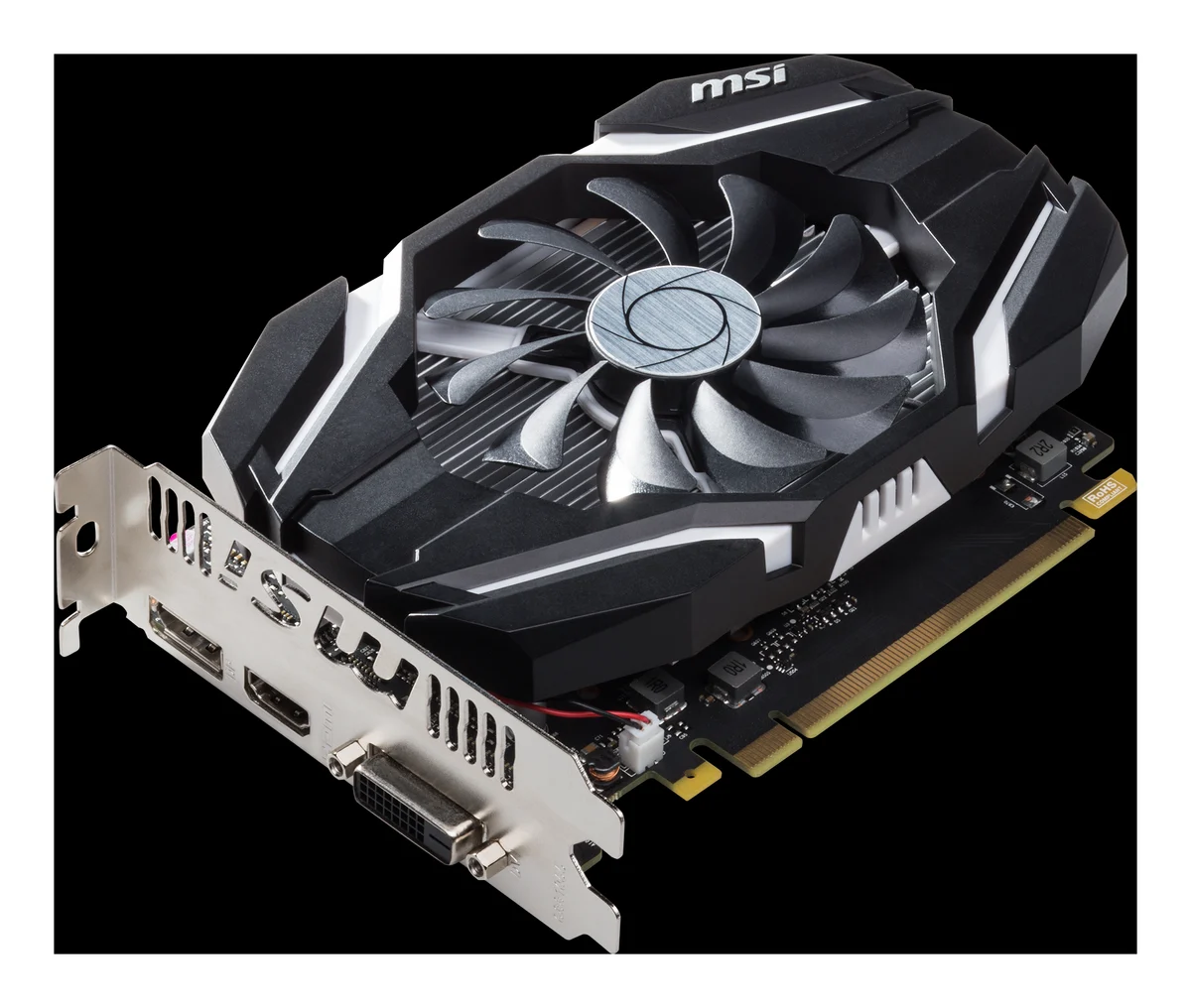
- Compact, low-profile-friendly design is common among partner cards
Cons
- Only 384 CUDA cores and a 64-bit memory bus limit gaming performance
- 2 GB of VRAM is too little for most modern games
- No ray tracing or AI upscaling hardware
Below average
Computed from specs & benchmarks via our public methodology.
Full specifications
Everything we track for the NVIDIA GeForce GT 1030
General
- Announced
- 2017
- Architecture
- Pascal
- Process
- 14 nm
- TDP
- 30 W
- Power connector
- None
Cores & Clocks
- Shading units
- 384
- RT cores
- 0
- Tensor / AI cores
- 0
- Base clock
- 1,227 MHz
- Boost clock
- 1,468 MHz
Memory
- VRAM
- 2 GB
- VRAM type
- GDDR5
- Bus width
- 64 bit
- Bandwidth
- 48 GB/s
Benchmarks
- 3DMark Time Spy
- 1,087Bottom 1%
- PassMark G3D
- 2,394Bottom 1%
Quick answers
Is the NVIDIA GeForce GT 1030 good in 2026?
The NVIDIA GeForce GT 1030 earns an Inno Score of 30/100 (“Below average”) based on its specs and benchmark results. The GeForce GT 1030 is NVIDIA's entry-level Pascal desktop graphics card, launched in 2017 with 384 CUDA cores and 2 GB of GDDR5 on a 64-bit bus. It targets basic desktop upgrades and light gaming, and runs without an external power connector.
What are the key specs of the NVIDIA GeForce GT 1030?
VRAM: 2 GB · Boost clock: 1,468 MHz · TDP: 30 W · 3DMark Time Spy: 1,087
What are the closest alternatives to the NVIDIA GeForce GT 1030?
Its closest rivals on InnoReviews are AMD Radeon RX 550, NVIDIA GeForce GTX 1050, NVIDIA GeForce GTX 960 — open the comparison pages for a spec-by-spec breakdown.